 06/10/2026
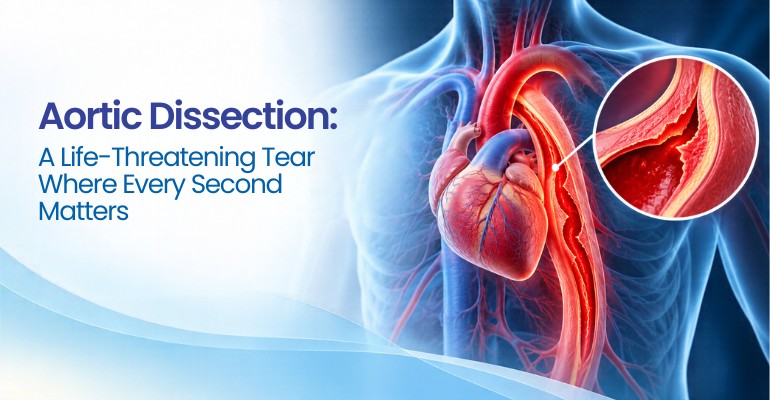
Aortic Dissection: A Life-Threatening Tear Where Every Second Matters
The aorta is the body's largest artery. It carries oxygen-rich blood from the heart and distributes it to the brain, organs, and tissues throughout the body. Because of its size and vital role, aortic problems can become serious very quickly.
An aortic dissection occurs when a tear develops in the inner layer of the aortic wall. Blood then enters between the layers of the artery wall, creating a new channel and potentially causing the layers to separate. The dissection can extend along the aorta and interfere with blood flow to important organs.
Aortic dissection is a medical emergency. Its symptoms can sometimes resemble those of a heart attack or other conditions that cause severe chest pain. Recognizing the warning signs and seeking emergency medical care without delay can be critical.
What Is an Aortic Dissection?
The aorta has a strong wall made up of several layers. Under normal circumstances, these layers work together to withstand the pressure generated by the heart as it pumps blood.
In an aortic dissection, a tear occurs in the innermost layer, called the intima. Blood can pass through this tear and move into the middle layer of the aortic wall. This creates a false passage for blood and can cause the layers of the aorta to separate.
The dissection may remain localized or extend along a significant portion of the aorta. If blood flow to an organ or limb becomes blocked, the resulting lack of oxygen can cause serious damage.
In some cases, the weakened section of the aorta can rupture. This may result in severe internal bleeding and can be fatal without immediate treatment.
Types of Aortic Dissection
Aortic dissections are commonly classified according to their location.
Type A Aortic Dissection
Type A involves the ascending aorta, which is the section of the aorta closest to the heart. It may also extend into the aortic arch or other sections of the aorta.
This type is particularly dangerous because it can affect the heart and the blood vessels supplying the brain. It may cause complications such as heart valve problems, cardiac tamponade, heart attack, stroke, or rupture of the aorta.
Type A dissection generally requires urgent surgical evaluation and treatment.
Type B Aortic Dissection
Type B begins in the descending portion of the aorta and does not involve the ascending aorta.
Treatment depends on the patient's condition. Some uncomplicated Type B dissections may initially be managed with medication, careful blood pressure control, and close monitoring. If complications develop, an endovascular procedure or surgery may be necessary.
What Causes Aortic Dissection?
Aortic dissection is usually associated with weakening or damage to the aortic wall. Several conditions and risk factors can increase the likelihood of developing the condition.
High Blood Pressure
Long-term uncontrolled high blood pressure places continuous stress on the walls of the arteries. Over time, this can contribute to weakening of the aortic wall and increase the risk of dissection.
Aortic Aneurysm
An aortic aneurysm is an abnormal enlargement or bulging of the aorta. A weakened and enlarged section of the aorta may be more vulnerable to complications, including dissection.
Connective Tissue Disorders
Certain inherited disorders can affect the strength and structure of connective tissue throughout the body. Conditions such as Marfan syndrome, Loeys-Dietz syndrome, and vascular Ehlers-Danlos syndrome can increase the risk of aortic disease.
Abnormal Aortic Valve
Some people are born with a bicuspid aortic valve rather than the usual three-leaflet valve. This structural difference can be associated with an increased risk of aortic enlargement and other aortic complications.
Family History
A family history of aortic aneurysm or dissection can increase an individual's risk. Some forms of aortic disease have a genetic component.
Age
Aortic dissection is more common in older adults, partly because the aortic wall can become less elastic and more susceptible to damage over time.
Trauma
Severe chest trauma, such as that resulting from a major vehicle accident, can damage the aorta and cause dissection or other forms of aortic injury.
Symptoms of Aortic Dissection
Symptoms usually begin suddenly. The most characteristic symptom is abrupt and severe pain in the chest or upper back.
Possible symptoms include:
- Sudden severe chest pain
- Severe upper-back pain
- Pain that may move toward the neck, jaw, abdomen, or back
- A feeling of tearing, ripping, or intense pressure
- Shortness of breath
- Fainting
- Severe weakness
- Dizziness
- Sweating
- Rapid heartbeat
- Weakness or numbness on one side of the body
- Difficulty speaking
- Weakness or pain in an arm or leg
Not everyone experiences the same symptoms. The symptoms can depend on where the dissection occurs and whether it affects blood flow to other parts of the body.
Why Can the Pain Be So Sudden?
The aorta is exposed to high pressure every time the heart beats. When a tear develops in the aortic wall, blood can rapidly enter the wall and separate its layers.
This sudden change can produce intense pain. The pain may be felt in the chest initially and may later move toward the back or abdomen as the dissection extends.
A sudden onset of severe chest or upper-back pain should therefore always be taken seriously.
Aortic Dissection and Heart Attack: Are They the Same?
No. A heart attack usually occurs when blood flow to part of the heart muscle becomes blocked, often because of a blood clot forming over a narrowed coronary artery.
Aortic dissection involves a tear in the wall of the aorta.
However, the symptoms can overlap. Both conditions can cause severe chest pain, sweating, shortness of breath, nausea, or weakness.
Because both can be life-threatening, sudden severe chest pain should not be self-diagnosed. Emergency medical assessment is necessary to determine the cause.
Why Is Aortic Dissection an Emergency?
An aortic dissection can extend rapidly. If the false channel blocks blood flow through branches of the aorta, vital organs may not receive enough oxygen-rich blood.
Potential complications include:
Stroke
If blood flow to arteries supplying the brain is affected, a stroke may occur. Symptoms may include sudden weakness, facial drooping, confusion, or difficulty speaking.
Heart Complications
A dissection near the heart can interfere with the aortic valve or coronary arteries. It may result in heart failure, heart attack, or other serious cardiac problems.
Kidney Injury
Reduced blood flow to the kidneys can cause acute kidney injury.
Intestinal Ischemia
If blood flow to the intestines is reduced, intestinal tissue can become damaged. This is a serious complication requiring urgent treatment.
Limb Ischemia
Reduced blood flow to an arm or leg can cause pain, weakness, numbness, or loss of pulses.
Aortic Rupture
A rupture can cause massive internal bleeding and is a life-threatening emergency.
How Is Aortic Dissection Diagnosed?
Because symptoms can resemble other emergency conditions, doctors need to assess the patient quickly.
Diagnosis begins with a medical history and physical examination. Doctors may ask when the pain began, how suddenly it developed, where it is located, and whether it has moved to another area.
Blood pressure may be measured in both arms, and doctors may check pulses and signs of reduced blood flow.
Imaging is generally required to confirm the diagnosis.
CT Angiography
CT angiography can provide detailed images of the aorta and show the location and extent of the dissection. It is commonly used when the patient is stable enough to undergo CT imaging.
Transesophageal Echocardiography
Transesophageal echocardiography uses an ultrasound probe positioned in the esophagus to obtain detailed images of the heart and nearby sections of the aorta. It can be particularly useful in certain emergencies.
Magnetic Resonance Imaging
MRI can provide detailed images of the aorta. However, because it may take longer and may not be suitable for every emergency, its use depends on the patient's condition.
How Is Aortic Dissection Treated?
Treatment depends on whether the dissection is Type A or Type B, its location, severity, and whether complications are present.
Medical Treatment
In many cases, especially while definitive treatment is being arranged, doctors work to reduce the force placed on the aortic wall.
Medications may be used to control:
- Blood pressure
- Heart rate
- Pain
Patients require close monitoring because the condition can change quickly.
Surgery for Type A Dissection
Type A dissection generally requires urgent surgery.
The surgeon may remove or replace the damaged portion of the aorta and repair the tear. If the aortic valve or other structures are affected, additional procedures may be necessary.
The precise operation depends on the location and extent of the dissection and the patient's overall condition.
Endovascular Treatment
For selected Type B dissections, an endovascular procedure may be appropriate.
A stent graft can be inserted through a blood vessel, often accessed through the groin, and positioned inside the aorta. The graft can help redirect blood flow away from the damaged portion.
This approach may be considered when the dissection causes complications such as organ ischemia, persistent pain, uncontrolled blood pressure, or a risk of rupture.
Can Aortic Dissection Be Prevented?
Not every case can be prevented. However, controlling risk factors can reduce the likelihood of aortic disease.
Important measures include:
- Monitoring blood pressure regularly
- Taking prescribed blood pressure medicines consistently
- Avoiding smoking
- Maintaining a healthy weight
- Managing cholesterol and other cardiovascular risk factors
- Following medical advice for known aneurysms
- Attending recommended imaging follow-ups
- Discussing a family history of aortic disease with a doctor
- Following specialist advice regarding strenuous exercise when aortic disease is present
People with inherited connective tissue disorders may require lifelong cardiovascular monitoring.
Living After an Aortic Dissection
Survival from an aortic dissection does not mean that follow-up care is no longer necessary. People who have experienced an aortic dissection may require long-term monitoring because changes can develop in other portions of the aorta.
Follow-up may include regular imaging, blood pressure management, medication, and lifestyle modifications.
Patients should follow the treatment plan provided by their cardiovascular team and report new or unusual symptoms promptly.
When Should You Seek Emergency Care?
Sudden severe chest or upper-back pain requires immediate medical attention, especially if it is accompanied by:
- Shortness of breath
- Fainting
- Severe weakness
- Sweating
- Difficulty speaking
- Sudden numbness
- Weakness of an arm or leg
- Severe abdominal pain
Do not wait for symptoms to disappear or attempt to determine the cause at home.
Conclusion
Aortic dissection is a serious medical emergency caused by a tear in the wall of the aorta. It can progress rapidly and may interfere with blood flow to the heart, brain, kidneys, intestines, or limbs.
Sudden severe chest or upper-back pain is an important warning sign. Prompt emergency assessment allows doctors to identify the condition and determine whether urgent surgery, endovascular treatment, or medical management is appropriate.
Controlling blood pressure, avoiding smoking, managing cardiovascular risk factors, and following recommended monitoring can also help reduce the risk of aortic complications.
When it comes to suspected aortic dissection, every second matters.